Cary IL Townhome Guide: Condo Costs, HOA Fees & Rules
April 23, 2026
April 23, 2026
If you are thinking about buying a townhome or condo in Cary, you are probably asking a simple question with a not-so-simple answer: what are you really getting for the price and the monthly fee? That is a smart place to start, especially in a market where attached homes can range from compact, budget-conscious options to spacious homes that feel a lot like single-family living. In this guide, you will learn how townhome and condo ownership works in Cary, what current listings suggest about pricing and lifestyle, and what to review before you close. Let’s dive in.
Cary is a village in McHenry County with a population of 17,826, about 45 miles from downtown Chicago and 30 miles from O'Hare. It also offers access to the Union Pacific Northwest line through the downtown Cary Metra station, and the Fox River borders the village to the south. You can learn more from the Village of Cary overview.
For buyers, Cary blends suburban convenience with a practical housing market. According to U.S. Census QuickFacts for Cary, the owner-occupied housing rate is 84.8%, the median owner-occupied home value is $309,800, and median gross rent is $1,428.
The broader market remains active. Zillow’s Cary housing market data reports an average home value of $368,573, up 4.6% year over year, with 31 homes for sale and 15 new listings as of March 31, 2026.
If you are focused on attached housing, inventory is available but limited. Current Cary listings on Zillow show 11 townhomes and 1 condo, which means you may need to move quickly when the right property hits the market.
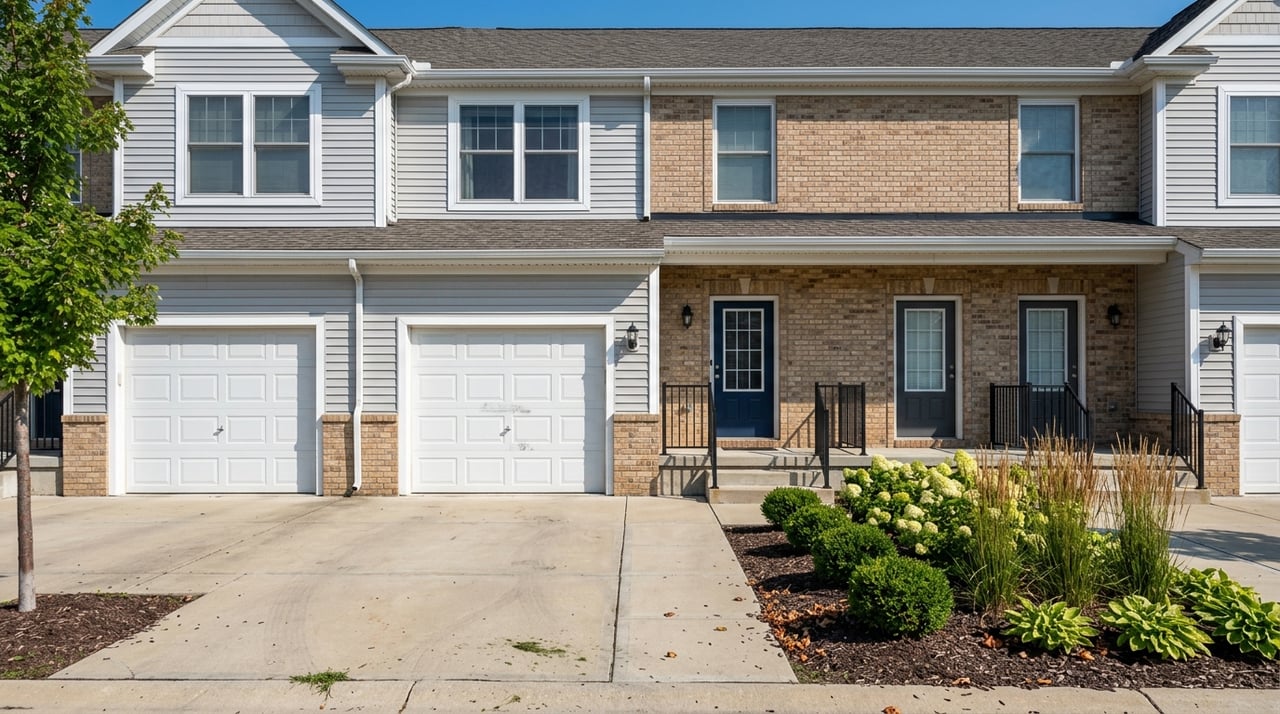
The price and size range is fairly broad for a smaller village. Current townhome examples run from a 1,140-square-foot, 2-bedroom, 2-bath home at $205,000 to larger 3-bedroom, 3-bath layouts around 1,574 to 2,061 square feet priced from about $310,000 to $424,900 or more.
That range matters because it shows Cary attached homes are not all serving the same buyer. Some can work as an entry point into homeownership, while others offer the space and layout you might expect from a detached home, just with different maintenance and ownership structures.
The biggest mistake buyers make is assuming the label tells the whole story. In Illinois, the declaration controls what is considered part of your unit, what counts as a common element, and what is treated as a limited common element. You can review that framework in the Illinois Condominium Property Act.
In practical terms, two Cary attached homes can look very similar and still come with different owner responsibilities. One may be fee simple with an HOA handling selected exterior items, while another may be a true condo where more of the building and surrounding elements are maintained through the association.
A current example helps show that difference. A downtown Cary townhome at 128 E Main St is listed as a fee simple property with an HOA, while a condo at 363 Milano Dr is described as a condo in a four-residence building.
One of the first budget questions buyers ask is what the monthly fee includes. In current Cary examples, HOA dues range from $195 to $275 per month.
Those dues can cover a meaningful share of your routine upkeep. In the downtown townhome example, the fee includes insurance, exterior maintenance, lawn care, and snow removal. In the Milano Drive condo example, dues include common insurance, exterior maintenance, lawn care, trash service, and snow removal.
That can make monthly costs more predictable, but you still need to budget for more than the HOA. Your full monthly picture may include your mortgage payment, property taxes, homeowner’s insurance, and association dues.
It is easy to focus on purchase price and forget the rest of the ownership costs. A home with a lower asking price can still feel expensive month to month if taxes, insurance, and dues stack up higher than expected.
For example, the current condo listing at 363 Milano Dr shows annual property taxes of $7,155, while the downtown townhome example carries $195 in monthly dues. Reviewing these numbers together gives you a more realistic idea of affordability than the list price alone.
Reserve funding matters too. Under Illinois law on condo budgets and reserves, associations must adopt a detailed annual budget and provide for reasonable reserves for capital expenditures and deferred maintenance, unless owners vote to waive or reduce them. If reserves are low or waived, that may increase the risk of future special assessments.
This is one of the most important parts of attached-home ownership. You should never assume the association handles every exterior item just because dues are charged every month.
In Illinois, items like balconies, patios, perimeter doors, and windows in perimeter walls may be treated as limited common elements that serve just one unit. The declaration should spell out who is responsible for repairing or replacing them, which is why the same type of feature may be owner-maintained in one community and association-maintained in another.
Before you buy, ask specifically about:
Clear answers here can help you avoid expensive surprises later.
Even when the association carries master insurance, you still need your own coverage. Under Illinois condo insurance rules, the association must insure the common elements and units, including limited common elements and, unless the board decides otherwise, bare walls, floors, and ceilings.
That does not always mean your personal upgrades are covered. Improvements and betterments may not be included, which is why owner-side insurance remains important for many condo and townhome buyers.
As you review a property, ask what the association policy covers, what your lender will require, and whether there are high deductibles that could affect you after a claim.
Cary attached homes can appeal to very different buyers depending on location and layout. A downtown townhome near the Metra station may be attractive if you want easier commuter access and a walkable-to-downtown feel. A ground-level condo may appeal more if you want single-level living and more exterior upkeep bundled into the monthly dues.
Beyond the home itself, Cary offers amenities that shape day-to-day life. According to the Cary Park District, residents have access to more than 7.5 miles of trails, and district facilities are visited by more than 100,000 people annually. Named amenities include Lions Park, Sunburst Bay Aquatic Center, the Community Center, and the dog park.
That means your decision is not just about square footage. It is also about how you want to live, commute, and spend your time once you move in.
In Illinois, resale disclosures for condos and common-interest communities can tell you a lot about the health of the association. For common-interest communities, the resale disclosure package requirements include governing documents, lien status, anticipated capital expenditures, reserve or replacement fund status, recent financial statements, pending suits or judgments, and insurance information.
For condo resales, the condominium resale disclosure requirements are similar and also include information about prior alterations and compliance. These documents can reveal issues that are not obvious during a showing.
When you review a Cary condo or townhome, focus on these points:
Rules can vary widely from one community to another. Even if one current Cary listing allows cats and dogs or includes a two-car garage, that does not mean another community has the same policy.
That is why document review matters so much. Verify pet limits, rental restrictions, guest parking rules, and garage or driveway arrangements before you commit.
If schools are part of your planning, verify the school boundary for the exact address. Current Cary examples show different district assignments, so it is best to confirm the specific property rather than assume the same assignment applies across town.
Because Cary has relatively limited attached-home inventory, preparation can give you an edge. You will want a clear price range, a short list of must-haves, and a realistic understanding of your all-in monthly payment.
It also helps to compare communities, not just homes. Two properties with similar square footage may have very different dues, reserve strength, maintenance obligations, or rules.
A good buying strategy usually includes:
Buying a condo or townhome in Cary can be a smart move if you look beyond the photos and the list price. The right attached home can offer a lower-maintenance lifestyle, a comfortable amount of space, and access to everything that makes Cary convenient, from Metra service to parks and trails.
The key is understanding how ownership works before you buy. If you know what the dues cover, who repairs what, how healthy the reserves are, and whether the rules fit your lifestyle, you can make a much more confident decision.
If you want help comparing Cary townhomes and condos, reviewing what association documents mean in plain language, or setting up a focused home search in the northwest suburbs, connect with the Alice Picchi Team.
Stay up to date on the latest real estate trends.


Top Real Estate Team specializing in the Chicago northwest suburbs. We have a strong attention to detail, adapt well to situations, and work well under pressure.